
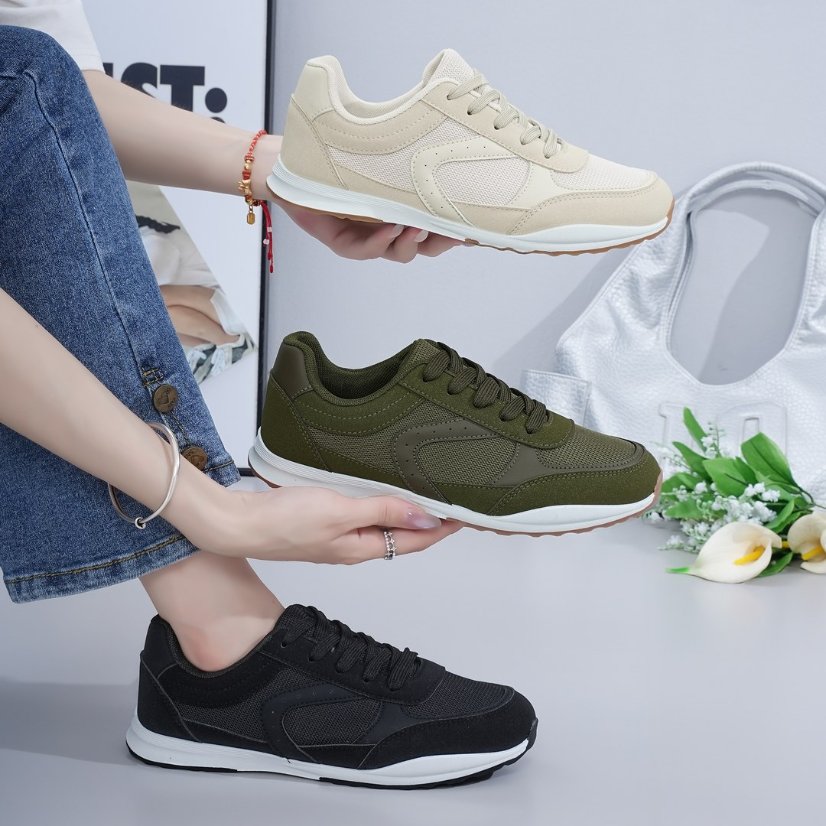
A shoe colour approval should identify one supplier variant and state which visible areas the buyer accepts. Request matching outside, inside, top and heel views of that same variant when those areas matter to the order. Treat photographs as identification and discussion references. If colour matching is a purchase requirement, agree the physical reference and evaluation scope separately instead of assuming that a screen image defines an exact finished colour.
Turn a multi-colour catalogue photo into a specific enquiry
Hengku’s Mesh surface running shoes page identifies product code HK0028 and lists Beige, dark green and black as catalogue colours. The photograph presents several shoes in different colourways. These names and appearances help a buyer identify the starting enquiry, but they do not define a physical colour standard or independently verify the material suggested by the product title. Ask the supplier which current variant corresponds to the selected pictured shoe.
Keep the supplier’s variant identifier alongside the product link and the selected reference image. If more than one pictured option is required, give each its own reference. A reply approving the catalogue image as a whole can leave uncertainty over which shoe, panels and accessories were included in the decision. Naming the intended variant first gives the later colour discussion a clear subject.
Separate the areas that can change independently
A shoe can have contrasting areas around the toe, side, heel and opening, as well as laces and visible bottom edges. Describe the areas that matter to your selected design without assuming that each has the same material or finish. Ask the supplier to connect your descriptions to the offered variant. The purpose is to prevent a general colour name from hiding a difference in one visible component.
A simple annotated reference can point to each area, supported by an unmarked photograph. Use neutral area names if the construction is unconfirmed. For example, referring to a visible side panel does not require a claim that it is leather, textile or a particular synthetic material. Request material information separately if it is relevant to the purchasing decision, and ask the supplier to identify the basis for its description.
Reference area | Useful confirmation | Avoid assuming
Main visible upper areas | Which pictured areas share the selected colour reference | A photograph verifies their material
Contrasting side details | Their appearance on the selected variant | Both sides have identical details
Laces and opening | Whether pictured colours belong to the offered version | A styling photograph defines all supplied parts
Heel area | Rear view of the same selected shoe | The side view shows the complete rear
Visible bottom edge | Which edge appearance is included in the approval | Its appearance establishes compound or performance
Ask for views of the same variant rather than a mixed gallery
Request the outside and inside profiles when the placement of contrasting details is important. Add a top view for the lace and opening areas, and a rear view for the heel. The required set depends on the buyer’s actual decision; it does not have to become an open-ended photo request. Explain which uncertainty each additional view is intended to resolve so that the supplier can return a useful answer.
Ask the supplier whether the views show the same physical shoe or the same confirmed variant. If photographs are gathered from different samples, keep that fact explicit. A buyer should not approve the front from one proposed colourway and the heel from another by accident. If a view is only illustrative, identify it as such and state which details still need confirmation for the item being quoted.
Use photographs to locate the choice, then define colour matching
Photographs viewed under different lighting or on different displays may give a buyer different impressions of the same shoe. Request a coherent photo set and ask whether lighting, editing or the photographed sample changed between views. This can clarify the comparison, but it does not make a picture an exact physical colour standard. Avoid promising that the delivered shoe will match a buyer’s screen merely because the supplier confirms the pictured variant.
If a physical colour match is necessary, agree the reference sample or other reference system, the areas it applies to and the evaluation conditions with the supplier. Ask what supporting sample can be provided for the selected version. Keep that agreement separate from the initial visual selection. No colour tolerance, finish requirement or matching capability should be inserted into the order as an assumed supplier commitment.
Write an approval that identifies its limits
Record the supplier model and variant, the selected view references and the visible areas covered by the decision. Explain whether the buyer is selecting an overall colour arrangement, approving a particular physical sample, or still waiting for a matching reference. These are different decisions. A concise record can make that distinction without repeating every message in the sourcing discussion.
List unresolved areas directly. For example, the side arrangement may be selected while the rear view is still outstanding. Keep that limited selection visible instead of writing a broad approval that another person could apply to the entire shoe. The supplier’s reply should acknowledge the exact scope and identify any difference between the pictured sample and the version it proposes to supply.
• Identify one model and one supplier-confirmed variant for each approval record.
• State which views and visible areas support the selection.
• Distinguish a photo-based choice from an agreed physical colour reference.
• Retain pending areas and proposed differences beside the accepted scope.
Keep substitutions and repeat enquiries tied to the accepted reference
If a supplier proposes a different lace colour, panel appearance or bottom-edge colour, ask it to identify that change against the accepted reference. A replacement image should not silently erase an earlier decision. Retain both references until the buyer accepts or rejects the proposal, then identify which one applies to the order. An unchanged overall colour name is not enough to show that every visible area remains the same.
For a repeat enquiry, send the accepted reference and ask the supplier to confirm the currently offered variant. Obtain an explanation of any changed appearance before carrying forward the old approval. That approach lets purchasing preserve a clear selection history without treating a previous photograph as proof of current availability, material identity, colourfastness or manufacturing consistency. Those questions require their own supplier information and agreed evaluation.
Frequently asked questions
Is the catalogue colour name enough for an order?
It is a useful reference, but ask the supplier to identify the selected variant and confirm which visible areas the name covers. A broad name may not describe every contrasting part of the shoe.
Should every shoe view use the same variant?
Yes, when the set is intended to document one proposed colourway. If any image is illustrative or comes from another sample, record that difference and request the missing confirmation.
Does approval of a photo confirm colourfastness?
No. A photograph supports an appearance discussion. Colourfastness, material identity and other performance requirements need separate information and evidence relevant to the offered product.
Product and contact references
Catalogue reference: confirm matching item: https://hengkushoes.com/product/product-28/
Related catalogue reference: https://hengkushoes.com/product/product-29/
Contact Hengku Shoes: https://hengkushoes.com/contact/
Hengku Shoes blog: https://hengkushoes.com/blog/