
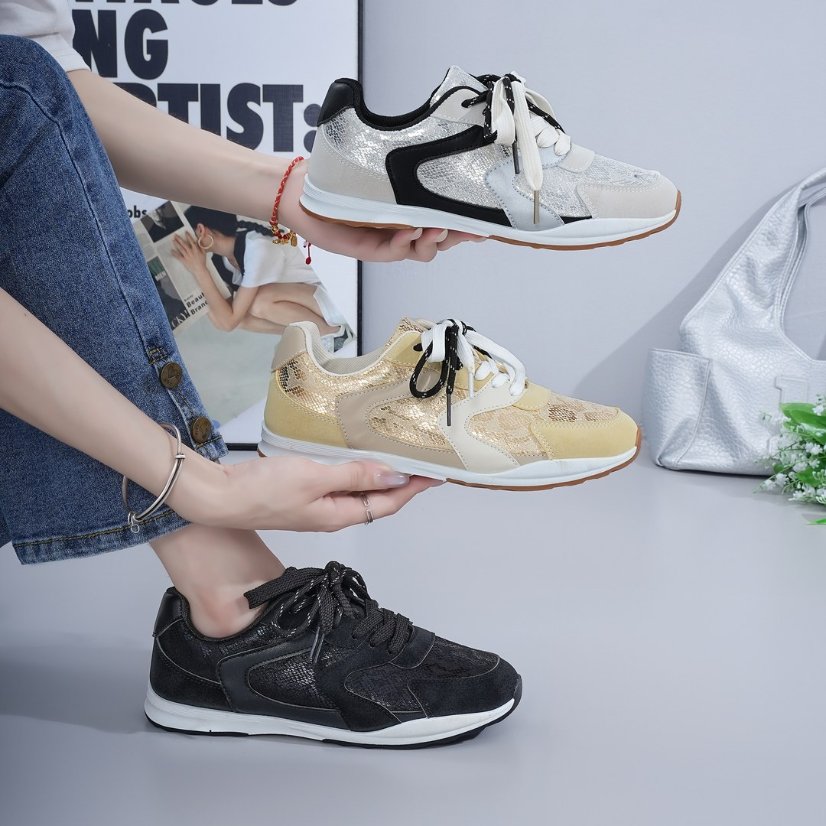
A useful shoe sample RFQ asks for a full underside photograph, closer heel and forefoot views, and a side reference of the same identified shoe. Connect every image to the supplier item code, selected colourway and sample revision. Approve the visible pattern only within that scope. A side photograph or an outsole pattern cannot establish the compound, construction or grip performance of the shoes being quoted.
Start with a catalogue reference that both parties can identify
Hengku’s Gold Velvet Sport Running Shoes page identifies product code HK0030. Its catalogue photograph presents multiple shoes from the side. That is a useful starting reference for an enquiry because a buyer can point to the particular shoe being discussed. It does not provide a complete view of the bottom surface. The catalogue name also should not replace a supplier’s confirmation of the materials or the exact variant offered.
Attach the product link and describe which pictured colourway the enquiry concerns. Ask the supplier to return its current item and variant identifiers before sending a sample request to purchasing. When a photograph contains several shoes, a reply such as same as the picture leaves the selected pair uncertain. An annotated copy can help identify the subject, but keep the unmarked reference beside it so that later comparisons remain understandable.
Write a small view list with a purpose for every image
An underside photo should show the complete outline, from the front edge to the heel, with the shoe positioned so that the buyer can understand its orientation. Ask for an unobstructed view rather than a crop that removes an end of the sole. A closer image can then resolve a particular area that is unclear in the full view. Requesting more detail has a specific purpose: it helps compare visible features, without turning an image into a test report.
Requested view | What the buyer records | What remains unconfirmed
Complete underside | Outline and visible pattern arrangement | Material identity and performance
Heel detail | Visible heel pattern and markings | Wear life or cushioning claims
Forefoot detail | Visible front pattern and edges | Grip under particular conditions
Side reference of the same shoe | Connection between upper and bottom views | Internal construction
Paired shoes together | Which left and right shoes belong to the sample | Size consistency across a size run
Keep the whole photo set tied to one sample identity
A supplier may have several related shoes with similar uppers. Ask whether every returned photo shows the same sample pair, or whether any view comes from a separate reference. This question matters when the photographed upper and bottom are sent in different messages. The buyer should be able to connect them through the item code and a clear explanation from the supplier, rather than assuming that proximity in a chat proves a match.
Record the sample identifier, supplier variant identifier, stated sample size, photo date and revision together. Request the stated size as a record of the photographed sample; do not infer that the same label will produce an identical outline on every offered size. If the supplier substitutes a sample or changes a feature, ask for the affected views again and identify the replacement in the approval record. This keeps old pictures from quietly becoming the reference for a changed proposal.
Separate appearance questions from evidence about performance
For a wholesale shoes enquiry, visible grooves, raised areas or surface texture can be described as appearance features. They are not enough to establish the outsole material or show how the shoe behaves on a particular floor. The same boundary applies to catalogue descriptions using terms about grip, durability or comfort. Ask the supplier to identify what those statements refer to and what supporting evidence is available for the exact offered item.
Where a buyer needs a specific performance requirement, put it in a separate enquiry section with the intended use and the evidence needed for evaluation. The supplier can then state whether it can support that requirement and on what basis. Do not write a performance acceptance into a photo approval simply because the bottom looks similar to another shoe. The purchasing record should say which visible features were accepted and which technical questions remain open.
Compare returned photographs before requesting a physical pair
Review the complete underside and side reference together. Check that the selected colourway and identifying details correspond to the enquiry, and list any area hidden by a hand, label or crop. When two suppliers provide different views, request the missing comparison view rather than treating an incomplete set as equivalent. A physical sample can still be necessary for the buyer’s evaluation; the photographs help clarify what sample is being requested.
Keep the supplier’s explanations alongside the images. If one shoe is an illustration and another is the actual available sample, state that difference in the comparison. For the sample order itself, request confirmation of the selected variant, included pair, sample size, charges and arrangements. Those commercial details are supplier quotations to obtain, not assumptions that can be derived from the website photograph.
• Identify the selected pictured shoe and obtain the supplier’s matching variant reference.
• Request the complete underside plus the particular detail views needed for comparison.
• Ask whether all views show the same physical pair and record any substitution.
• State the limited appearance approval and retain unresolved material or performance questions.
Use approval wording that a reorder buyer can understand
A practical approval message identifies the supplier item, selected variant, sample reference and the image set being accepted. It describes the visible pattern or outline that was reviewed, then lists the unresolved questions separately. Avoid a single unqualified approved message when several products appear in the conversation. Someone handling a later reorder should be able to understand the accepted reference without having to reconstruct the entire exchange.
If a later proposal uses a different bottom appearance, treat it as a proposed change and ask the supplier to explain it. A new side photograph alone cannot demonstrate that the underside reference remains unchanged. Retain the previous acceptance and the new proposal together until the buyer decides which reference applies. This is an identification discipline for the order, rather than a promise that appearance alone predicts how the finished shoes will perform.
Frequently asked questions
Can a side-profile shoe photo confirm the outsole pattern?
It may show an edge, but it does not establish the complete bottom pattern. Request a direct underside view of the same identified shoe before approving that appearance.
Does a deep-looking pattern prove slip resistance?
No. An image records appearance. Ask for evidence relevant to the exact item and intended requirement if grip performance is part of the purchase decision.
What if the supplier sends a different sample size?
Record that stated size and ask the supplier which aspects of the reference apply to the ordered size run. Keep any difference explicit rather than assuming that all photographed dimensions are transferable.
Product and contact references
Catalogue reference: confirm matching item: https://hengkushoes.com/product/product-30/
Related catalogue reference: https://hengkushoes.com/product/product-28/
Contact Hengku Shoes: https://hengkushoes.com/contact/
Hengku Shoes blog: https://hengkushoes.com/blog/